Opsin raises $21M to secure the agentic enterprise.
Hear from our founders →


Approving an AI platform does not settle the security questions around the agents employees build inside it. Each new connection can give an agent access to sensitive information or permission to act on someone’s behalf. The best AI security solutions help you understand which agents exist, what they can reach, and whether their behavior matches the job they were built to do.
Agent proliferation makes that oversight harder. Gartner forecasts that 40% of enterprise applications would incorporate task-specific agents by the end of 2026, up from less than 5% in 2025. As agents multiply, they can inherit overly broad permissions, expose sensitive data through existing sharing mistakes, and take actions outside their intended purpose. OWASP identifies excessive permissions and autonomy as causes of excessive agency, while separate platform inventories make ownership and activity harder to track. Security teams need enough context to distinguish legitimate access from risky behavior.
This guide compares seven AI security solutions on how they discover agents, judge risk, fix problems at the source, and cover your workforce's platforms. Start with the “at a glance” table, then read the reviews that match your agents.
The table below maps each tool to its primary function and the teams best served by it. If your priority is governing agents across approved enterprise platforms, start with Opsin and Geordie. If you are addressing cloud-hosted AI risk or model supply-chain security, Wiz and HiddenLayer are the more relevant starting points.
The reviews below cover each tool’s governance approach, key capabilities, and limitations worth testing before deployment. Each review reflects what the vendor’s product page describes as of this writing; confirm current scope and pricing before making a final decision.
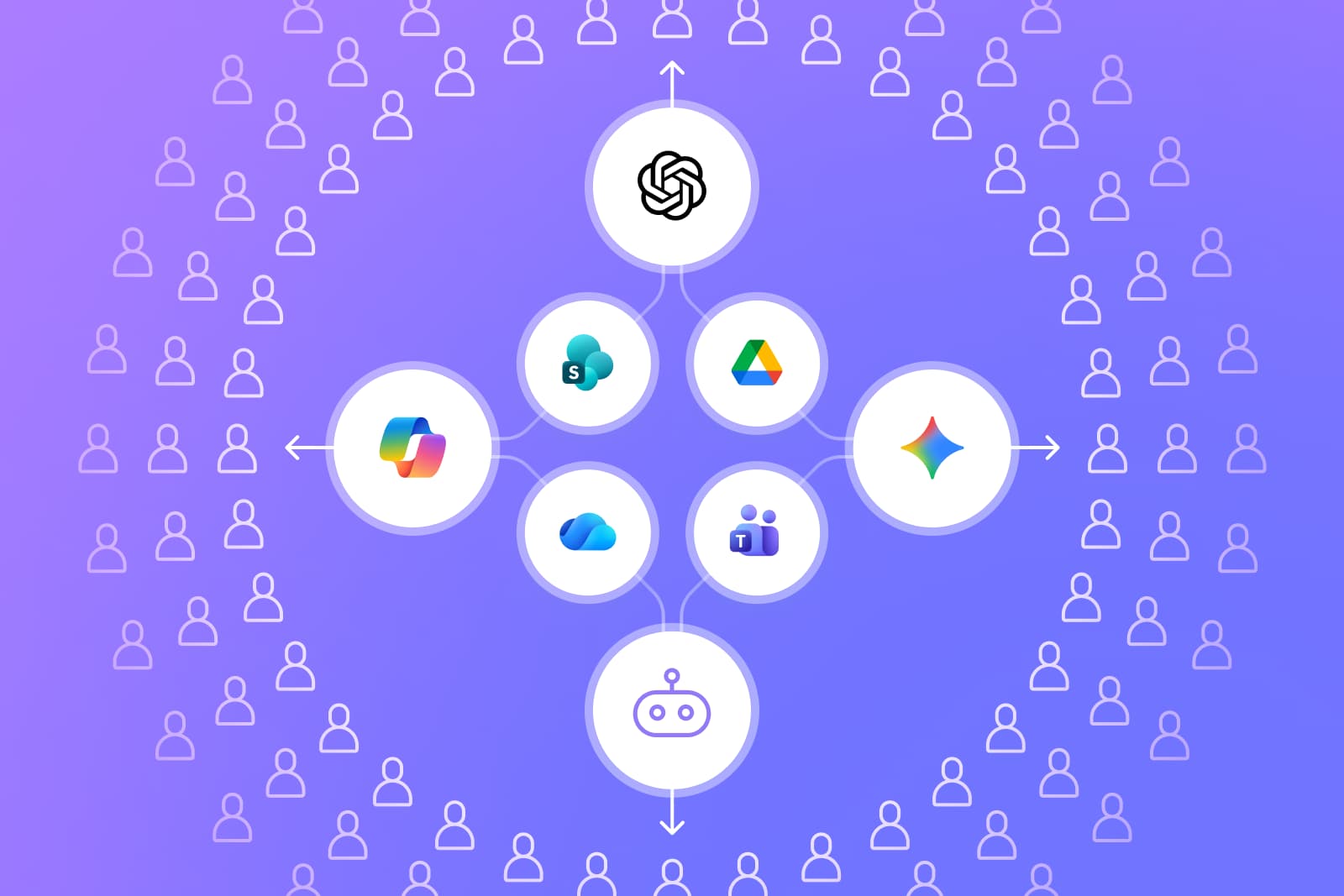
Opsin helps enterprises securely deploy and scale AI agents across Microsoft 365 Copilot, Copilot Studio, ChatGPT Enterprise, Claude, and Gemini. Its canonical agent model normalizes how those platforms describe agent tools, ownership, and permissions. Its Risk Graph combines that context with each agent's intended purpose, identities, data access, and behavior.
Best for: Enterprise security teams, particularly in regulated organizations, governing agents connected to company data across multiple approved AI platforms.
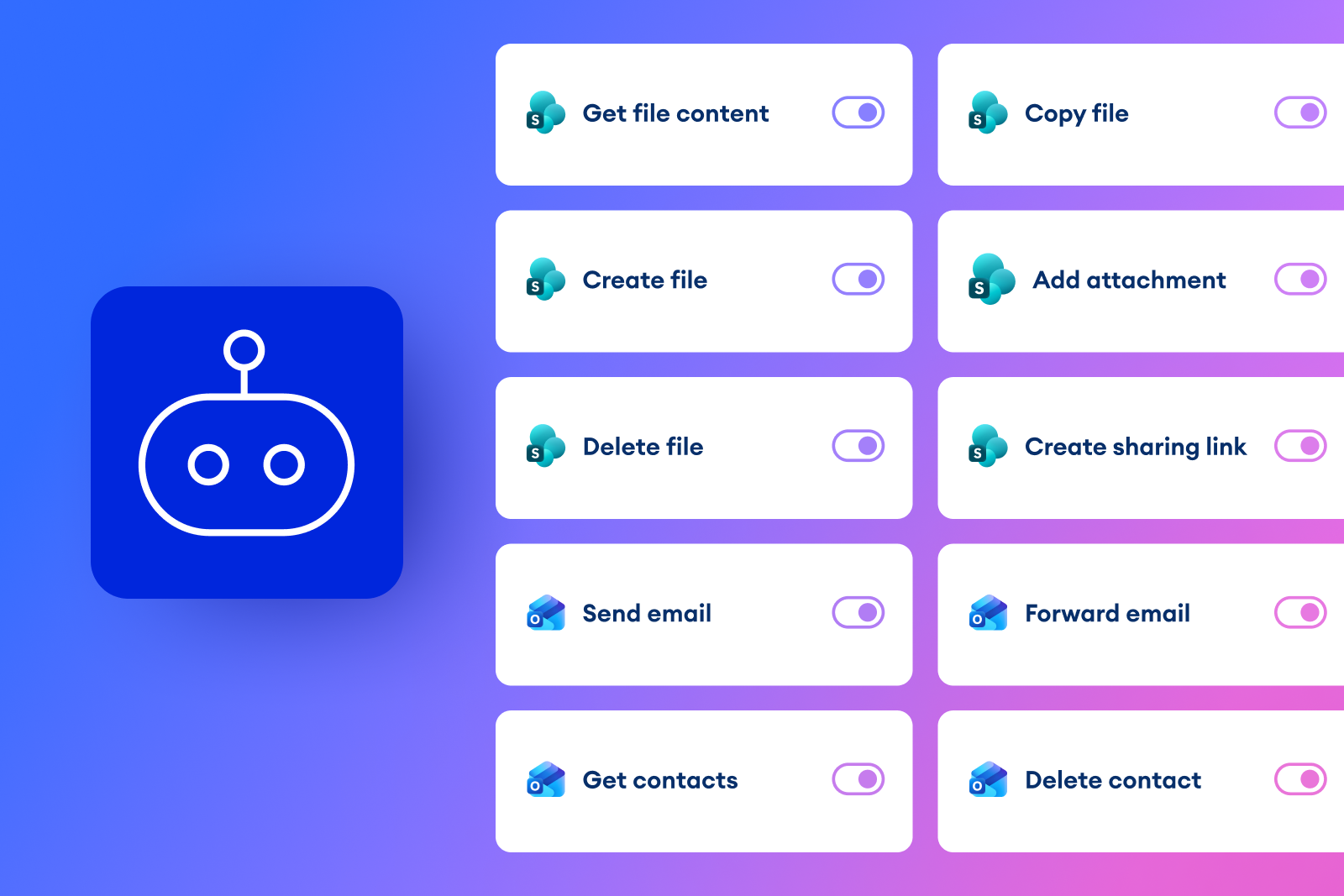
How it governs agents: Opsin's Risk Graph learns from agent activity over time and combines organizational policy with agent context to prioritize risks with evidence and root-cause detail. Depending on the platform integration, teams can quarantine an agent, block an action, or notify its owner with guidance to fix the underlying issue.
Deployment and pricing: API connection with no endpoint installation. Opsin advertises an assessment report within 24 hours and offers a free assessment; request platform pricing.
Noma combines agent discovery, access control, posture management, red teaming, and runtime protection through a shared governance layer.
Best for: Enterprises applying common policies across SaaS agents, coding assistants, and homegrown applications.
How it governs agents: Noma evaluates actions against session context, identity, data access, and intent. This supports policies that consider what an agent is trying to accomplish alongside the tools it uses.
Deployment and pricing: Integrates with existing infrastructure. Noma says protection can begin on day one; request a quote and implementation scope.
Geordie AI discovers agents across cloud, code, endpoints, and browsers, then connects their configuration with observed behavior.
Best for: Mixed agent environments needing detailed activity records and controls inside agent workflows.
How it governs agents: Beam can guide an agent toward an approved action, require operator confirmation before proceeding, or use binding hooks to prevent prohibited tool use outright.
Deployment and pricing: The AWS Marketplace listing states approximately 10 minutes to initial visibility, with per-agent core pricing and session-metered Beam add-ons. Its pricing table lists a $100,000 12-month platform contract; confirm the included agent count and deployment scope.
Onyx combines runtime inspection, posture assessment, and red teaming across browser AI, coding assistants, desktop agents, cloud workloads, and MCP servers.
Best for: Enterprises prioritizing controls that intervene before risky agent actions execute.
How it governs agents: Onyx applies policy at execution points and connects decisions to agent identity and user context. Session records support investigation and governance review.
Deployment and pricing: Cloud, hybrid, or self-hosted options. Onyx says most environments produce a working inventory within 24 hours, with policy enforcement on day one. Request a scoped quote.
HiddenLayer combines model supply-chain security with runtime protection for AI applications and agents.
Best for: Teams developing and operating custom AI applications, models, and coding workflows.
How it governs agents: HiddenLayer connects investigation with policy enforcement, including blocking actions and redacting information where supported. Its agentic runtime integration works through gateways and execution frameworks.
Deployment and pricing: Integration depends on the workload; request a quote and pilot schedule. The reviewed pages do not establish a fixed deployment time.
Wiz extends cloud security context into AI applications and agents, combining inventory, posture analysis, and runtime detection.
Best for: Cloud security teams that want AI risks investigated alongside infrastructure, identities, and data.
How it governs agents: Wiz correlates AI weaknesses with surrounding cloud conditions to prioritize exploitable combinations. It covers agents deployed across major cloud and enterprise AI platforms.
Deployment and pricing: Agentless posture assessment, with runtime requirements depending on scope. Request pricing and a rollout estimate for the proposed coverage.
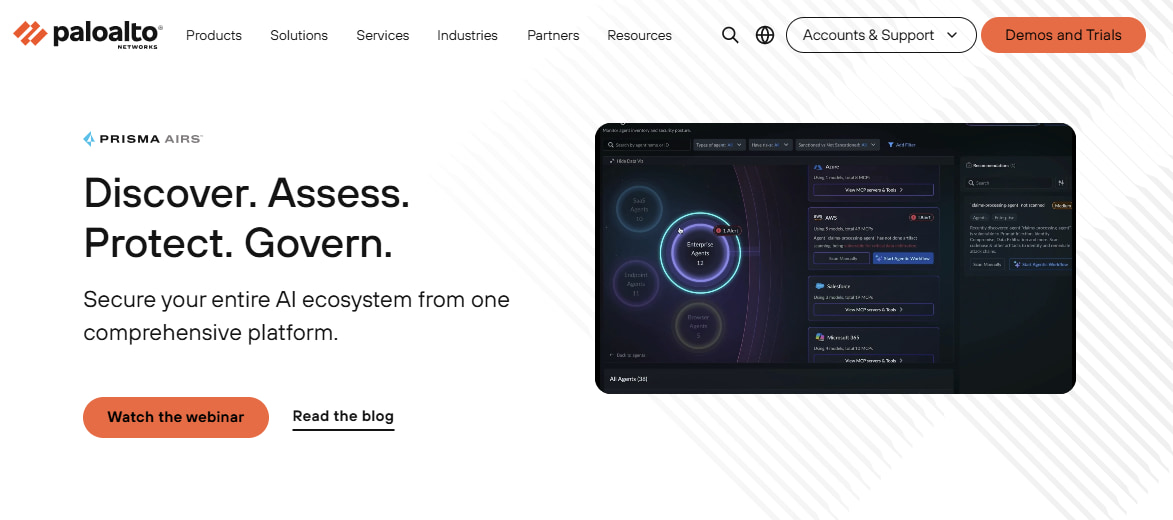
Prisma AIRS brings model, application, agent, identity, and runtime security into a broad AI security platform.
Best for: Enterprises consolidating AI security, particularly existing Palo Alto Networks customers.
How it governs agents: The gateway centralizes AI requests and policy. Network Intercept inspects traffic inline, while API Intercept embeds security checks in application code.
Deployment and pricing: The gateway supports hosted SaaS or a hybrid Kubernetes deployment and requires a Prisma AIRS license plus Strata Cloud Manager. Request a scoped quote.
The timing claims below describe different milestones. Initial visibility or a first policy is an early deployment result, not proof of complete protection.
*Vendor-stated estimates, not independently measured results or contractual SLAs.
Most tools in this category can produce an agent inventory. The criteria below go further, focusing on whether a solution can tell you why an agent is risky, act before damage occurs, and fix the underlying condition rather than just log the event.
Ask whether a finding connects the agent's owner, intended purpose, identity, permissions, and actual activity. Analysts need enough evidence to explain why an action creates risk.
An agent's access to sensitive financial data may be appropriate when it has a defined owner, limited sharing, and suitable capabilities. Risk rises when that access combines with broad availability or actions outside its purpose. Ask vendors to explain how organizational policy and agent context affect the assessment.
Separate immediate containment from lasting repair. Blocking an action can stop an incident; removing excessive permissions or an unsafe connector can prevent recurrence.
Require a platform-by-platform account of discovery, monitoring, and enforcement. A supported integration may expose configuration without enabling every response action.
Vendor demos rarely reflect the agents you actually run. Before committing to a platform, test it against your own environment - the agent types, platforms, and data connections your teams have already built or approved.
Choose according to the agents you need to govern. Noma and Onyx suit broad policy and runtime-control requirements; Geordie emphasizes behavioral visibility and controls within agent workflows. HiddenLayer fits development and model-security needs, Wiz connects AI risk with cloud exposure, and Prisma AIRS offers broad platform consolidation.
Scaling AI agents across approved AI platforms? Explore how Opsin unifies agent visibility, prioritizes contextual risks, and enables targeted containment to keep your enterprise secure. Its focus on purpose, access, and behavior helps security teams address exposure while supporting wider AI adoption and keeping legitimate work moving.