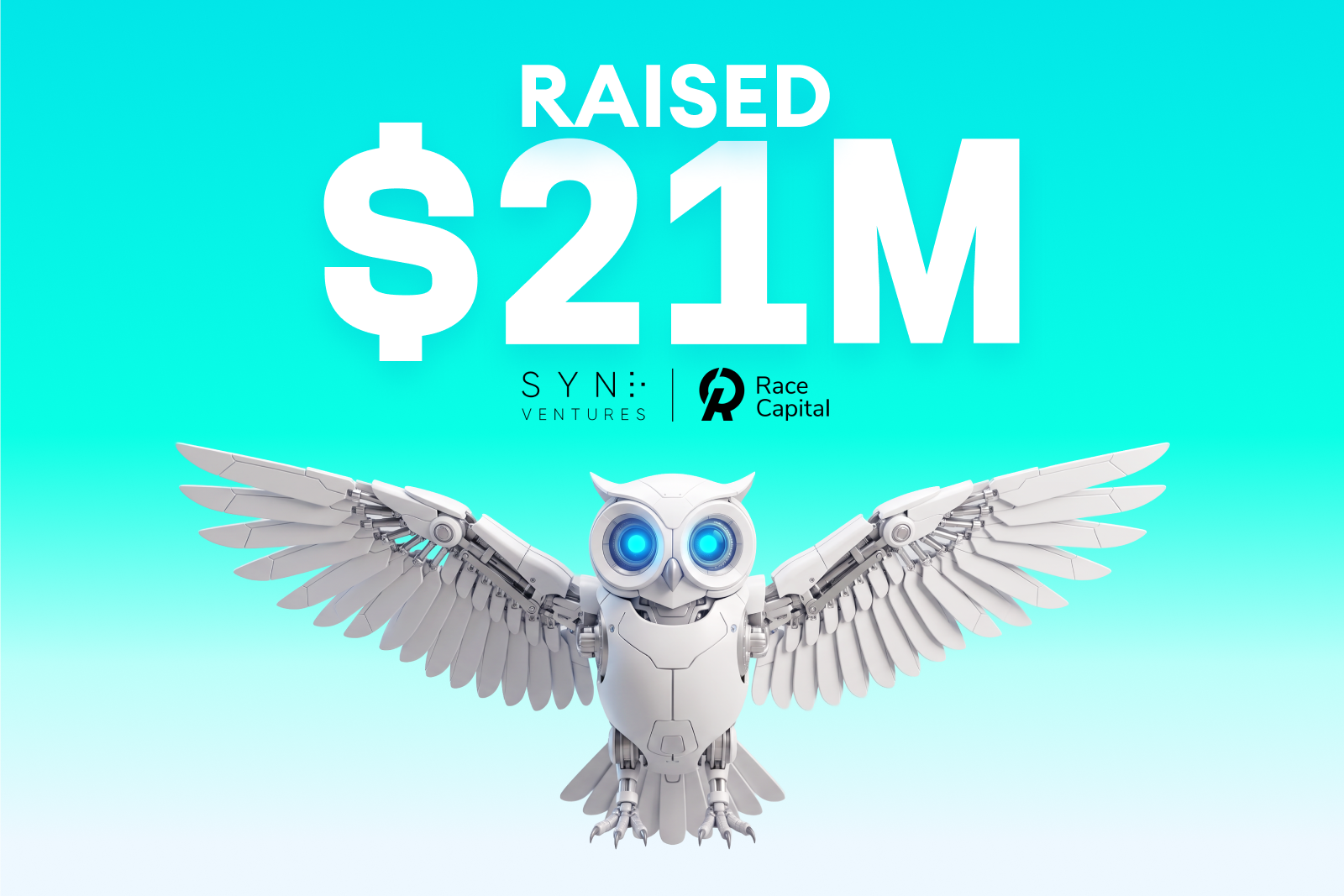
Opsin raises $21M to secure the agentic enterprise.
Hear from our founders →


Today we celebrate a big milestone for Opsin. $21M in funding led by SYN Ventures and Race Capital to fuel our mission of being the risk protection layer for the agentic future. This funding is a signal that the industry recognizes the paradigm shift towards a new, agentic security model. Opsin’s innovations are on the leading edge of that change in enterprise agent security.
For years, enterprise security controls were built around endpoints, networks, and prompt/response activity. But agents run server-side, connecting directly to enterprise data, with the authority to act. Legacy tools weren’t designed to judge whether an agent’s actions still align to its original purpose. Agent security needs a fundamentally different approach.
We started Opsin to help enterprises govern data oversharing as they scaled AI. As agents took hold, we broadened Opsin’s focus from protecting data in transit to governing the identities, intents, connectors, tool calls, and permissions of agents themselves.
Bottom line: With Opsin, security sees every agent across enterprise AI platforms, knows why an agent’s behavior is risky, which risk to prioritize, and has the evidence to back it up.
Every AI platform classifies agents differently, so we started by building a canonical AI agent model to normalize agents across enterprise-approved platforms like Microsoft 365 Copilot, Copilot Studio, Claude Enterprise, ChatGPT Enterprise, and Gemini.
Then, after surfacing thousands of projects and repeated oversharing patterns, the team prioritized agent posture (connectors, tool calls, sharing scope) and run-time agent behavior (i.e. agent accessed outside role scope, agents returned sensitive data to role mismatched users) as key inputs for building agent context.
This context powers Opsin’s Risk Graph, which continuously learns from agent activity to identify emerging risk.
When agents cross policy boundaries, Opsin helps contain the risk by quarantining the agent, blocking the action, or notifying agent owners of what to fix.
Context is what makes that judgment fair, fast, and enforceable, and it's what lets enterprises hand real work to agents without handing over control.
Our prediction for agent evolution in the next three years: agents will coordinate with each other far more than they coordinate with us.
Much of that communication will never be read by a human in real time, let alone reviewed or redirected. That isn't a reason to slow agents down. It's a reason to govern them the way we've always governed people.
We can't see inside a colleague's head; we judge them by what they do and what their role actually requires. Agents should be held to the same standard, and it’s what Opsin was built for.
When alerts pile up with false positives, teams are strapped, and friction to enforce feels high, security spends more time fighting its own systems than tackling real threats.
We built Opsin with a different philosophy. Understand the risk, back it up with data, and prioritize what matters with as little friction as possible. We connect via API, no special training required. First risk assessment identifying agents across enterprise approved AI platforms is delivered in 24 hours. From mid-sized enterprises to the Fortune 500, teams in healthcare, financial services, manufacturing and other regulated industries trust Opsin to secure their agents and confidently keep business moving.
This funding fuels our next wave of innovation. The investment allows Opsin to:
Thank you to the security leaders who took our cold calls, the design partners who worked alongside our team in early days, the partners who collaborated, the team who took the leap, the investors who believe in our vision, and the enterprises running on Opsin today across healthcare, financial services, and manufacturing.
Let’s go!
Today we celebrate a big milestone for Opsin. $21M in funding led by SYN Ventures and Race Capital to fuel our mission of being the risk protection layer for the agentic future. This funding is a signal that the industry recognizes the paradigm shift towards a new, agentic security model. Opsin’s innovations are on the leading edge of that change in enterprise agent security.
For years, enterprise security controls were built around endpoints, networks, and prompt/response activity. But agents run server-side, connecting directly to enterprise data, with the authority to act. Legacy tools weren’t designed to judge whether an agent’s actions still align to its original purpose. Agent security needs a fundamentally different approach.
We started Opsin to help enterprises govern data oversharing as they scaled AI. As agents took hold, we broadened Opsin’s focus from protecting data in transit to governing the identities, intents, connectors, tool calls, and permissions of agents themselves.
Bottom line: With Opsin, security sees every agent across enterprise AI platforms, knows why an agent’s behavior is risky, which risk to prioritize, and has the evidence to back it up.
Every AI platform classifies agents differently, so we started by building a canonical AI agent model to normalize agents across enterprise-approved platforms like Microsoft 365 Copilot, Copilot Studio, Claude Enterprise, ChatGPT Enterprise, and Gemini.
Then, after surfacing thousands of projects and repeated oversharing patterns, the team prioritized agent posture (connectors, tool calls, sharing scope) and run-time agent behavior (i.e. agent accessed outside role scope, agents returned sensitive data to role mismatched users) as key inputs for building agent context.
This context powers Opsin’s Risk Graph, which continuously learns from agent activity to identify emerging risk.
When agents cross policy boundaries, Opsin helps contain the risk by quarantining the agent, blocking the action, or notifying agent owners of what to fix.
Context is what makes that judgment fair, fast, and enforceable, and it's what lets enterprises hand real work to agents without handing over control.
Our prediction for agent evolution in the next three years: agents will coordinate with each other far more than they coordinate with us.
Much of that communication will never be read by a human in real time, let alone reviewed or redirected. That isn't a reason to slow agents down. It's a reason to govern them the way we've always governed people.
We can't see inside a colleague's head; we judge them by what they do and what their role actually requires. Agents should be held to the same standard, and it’s what Opsin was built for.
When alerts pile up with false positives, teams are strapped, and friction to enforce feels high, security spends more time fighting its own systems than tackling real threats.
We built Opsin with a different philosophy. Understand the risk, back it up with data, and prioritize what matters with as little friction as possible. We connect via API, no special training required. First risk assessment identifying agents across enterprise approved AI platforms is delivered in 24 hours. From mid-sized enterprises to the Fortune 500, teams in healthcare, financial services, manufacturing and other regulated industries trust Opsin to secure their agents and confidently keep business moving.
This funding fuels our next wave of innovation. The investment allows Opsin to:
Thank you to the security leaders who took our cold calls, the design partners who worked alongside our team in early days, the partners who collaborated, the team who took the leap, the investors who believe in our vision, and the enterprises running on Opsin today across healthcare, financial services, and manufacturing.
Let’s go!