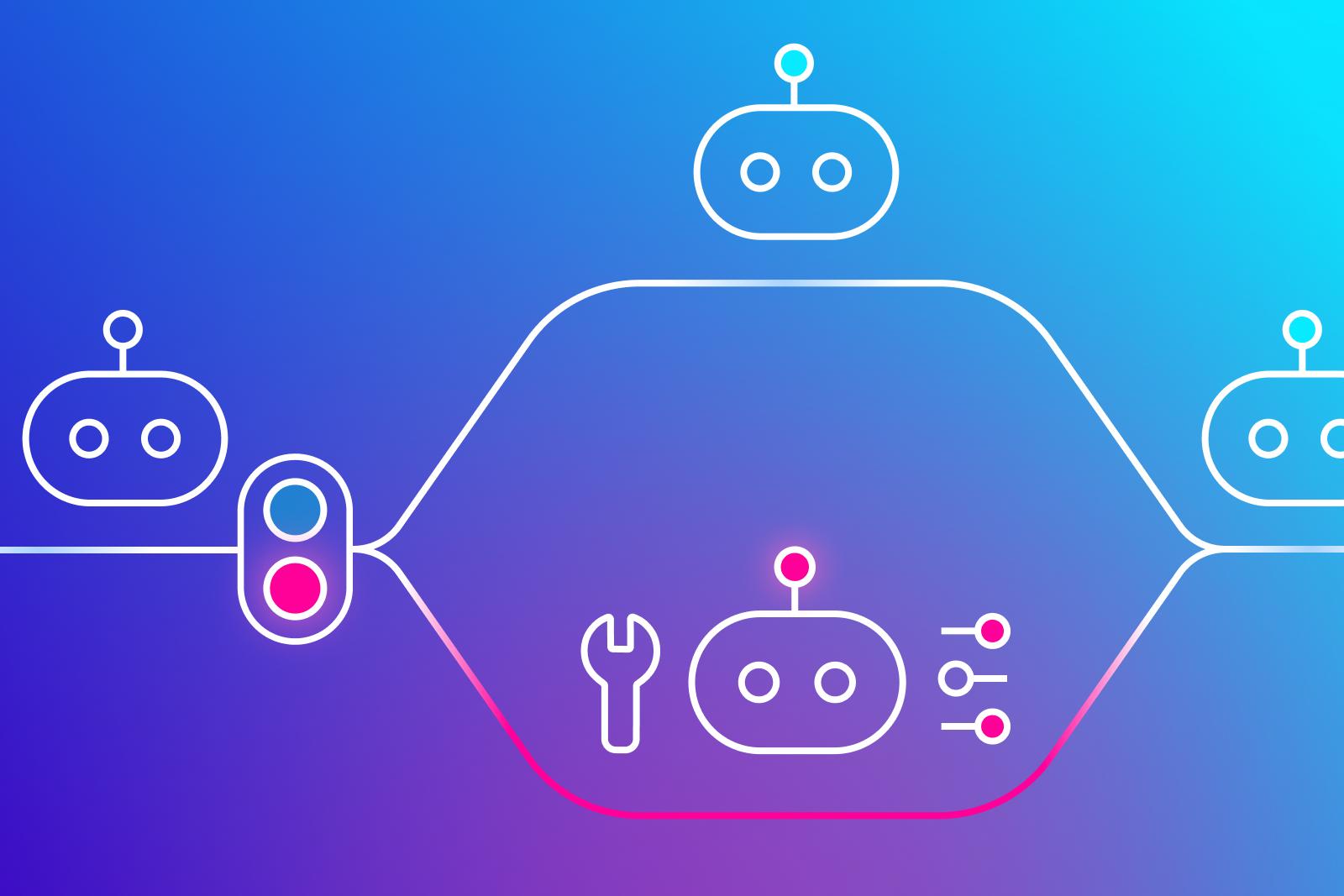

Agentic AI for enterprise refers to AI systems that can autonomously plan and execute actions across enterprise environments, rather than only generating responses to prompts. These agents operate within defined objectives, use enterprise data and tools, and complete multi-step workflows that span multiple systems.
Unlike traditional GenAI, agentic systems can initiate tasks, adapt to changing conditions, and carry actions through to completion with limited human involvement. Common activities include updating records, triggering workflows, querying internal systems, and interacting with SaaS applications using delegated access.
Platforms such as ChatGPT Enterprise, Microsoft Copilot, and Google Gemini are enabling enterprises to deploy these agents at scale, creating new efficiency gains alongside new security and governance challenges.
In the enterprise, agentic AI is typically applied most effectively in operational areas where work is repetitive, cross-system, and time-sensitive. Rather than replacing employees, these agents act as execution layers that carry out tasks based on predefined goals, policies, and permissions, as referenced in the prior section.
In customer support and help desk environments, agentic AI can manage multi-step resolution workflows without continuous human intervention. This includes triaging tickets, retrieving customer context from CRM systems, executing troubleshooting steps, and escalating issues only when predefined thresholds are met. The result is faster resolution times, reduced agent workload, and consistent handling of common service scenarios across channels.
Sales teams use agentic AI to automate administrative and follow-up tasks that typically reduce selling time. Agents can update CRM records after meetings, log interactions, generate follow-up actions, and synchronize data across sales tools. By acting autonomously within approved systems, agents help maintain data accuracy while allowing sales professionals to focus on relationship building and deal progression.
In finance and procurement, agentic AI supports processes such as invoice validation, purchase order reconciliation, vendor onboarding, and spend analysis. Agents can cross-check data across ERP, accounting, and procurement systems, flag anomalies, and initiate approvals according to policy. This reduces manual effort while improving process consistency and audit readiness.
HR teams apply agentic AI to employee lifecycle workflows, including onboarding, benefits inquiries, policy requests, and internal ticket routing. Agents can gather required documentation, update HR systems, and respond to routine employee questions using approved data sources. This improves employee experience while reducing operational overhead for HR staff.
When deployed with appropriate controls, agentic AI delivers measurable improvements in efficiency, consistency, and scalability across the enterprise.
While the previous sections highlight the operational value of agentic AI for enterprise, the same autonomy that enables efficiency also introduces distinct security risks that do not exist in traditional GenAI or automation systems.
Conventional enterprise security architectures were designed to protect human-driven activity and static systems. As agentic AI for enterprise introduces autonomous, non-human actors into workflows, these controls struggle to provide adequate visibility and enforcement.
Successful agentic AI deployments in the enterprise are typically accomplished by balancing autonomy with control. This step-by-step implementation framework helps ensure agents deliver value while operating safely within enterprise systems and policies.
Start with workflows that are repetitive, cross-system, and measurable. Define what “good” looks like, including business outcomes, acceptable error rates, and where human review is required.
Document the exact steps an agent will perform, including inputs, decision points, and tool calls. Inventory the systems involved, required data fields, and any approval gates. This is also where enterprises should define what the agent is explicitly not allowed to do.
Provision agents with least-privilege access. Use dedicated service identities, scoped tokens, and time-bound credentials where possible. Ensure access boundaries reflect data sensitivity, especially for HR, finance, and customer records.
Implement controls that constrain how agents invoke tools, call APIs, and write back to systems. Use allowlists for approved actions, enforce validation checks on critical fields, and require approvals for high-risk operations.
Run pilots in sandboxed or low-risk environments, then validate outcomes against the success criteria. Measure error patterns, escalation frequency, and operational load on human reviewers. Once stable, expand in phases.
To safely operationalize agentic AI at scale, enterprises need a structured deployment framework that aligns technical controls, security oversight, and organizational governance.
Enterprise adoption of agentic AI depends heavily on how well agents integrate with existing technology, data, and security ecosystems. Poor integration can limit effectiveness and increase operational risk, even when agent logic is sound.
Agentic AI should integrate cleanly with key enterprise systems such as ERP, CRM, HRIS, and ticketing platforms without requiring major architectural changes. Compatibility with existing APIs, identity providers, and workflow engines reduces deployment friction and minimizes disruption to established operating models.
Agents must operate within clearly defined data governance rules that align with enterprise policies. This includes enforcing access boundaries by data type, system, and context, and ensuring agents only interact with approved datasets. Strong governance is especially critical when agents handle regulated, personal, or financial information.
To maintain visibility and control, agent activity should integrate with existing SIEM, logging, and security monitoring tools. These integrations enable security teams to correlate agent actions with broader system events, detect anomalies, and investigate incidents using familiar workflows and controls.
To manage agentic AI effectively at scale, enterprises must measure both business outcomes and operational risk. Clear metrics help determine whether agents are delivering value while operating within defined security and compliance boundaries.
As agentic AI becomes embedded in enterprise workflows, dedicated security controls are required to manage autonomous behavior without slowing adoption. Opsin Security is designed to address the visibility, control, and compliance gaps outlined in the previous sections.
Agentic AI is changing how enterprises execute work by enabling autonomous, goal-driven actions across systems and teams. While the efficiency and scalability benefits are compelling, they also introduce new security, governance, and operational risks that cannot be addressed with traditional controls alone.
The enterprises most successful in scaling agentic AI will be those that operationalize a security-first framework, prioritizing identity-centric visibility and automated remediation. This includes clearly defining where agents can act, maintaining visibility into their behavior, and continuously measuring both business impact and risk. By combining structured implementation, thoughtful integration, and purpose-built security controls, organizations can confidently scale agentic AI while maintaining control, compliance, and trust across the enterprise.

Because agents can autonomously chain “allowed” actions across systems, they can unintentionally create high-impact outcomes without triggering traditional alerts.
• Map how individual permissions combine across systems into end-to-end workflows.
• Treat agents as non-human identities with their own threat models.
• Monitor sequences of actions, not just isolated events.
Opsin’s overview of AI security blind spots explains why legacy controls miss these risks.
Decision drift occurs when agents optimize objectives in ways that subtly diverge from business intent.
• Define explicit “negative objectives” (what agents must never optimize for).
• Continuously audit outcomes against policy, not just success metrics.
• Rotate prompts, constraints, and test scenarios to detect behavior changes.
For deeper insight into securing evolving AI behavior, see Opsin’s guidance on generative AI governance.
SIEMs lack visibility into intent, reasoning, and cross-tool context that define agent behavior.
• Correlate identity, data access, and AI actions as a single event chain.
• Capture tool invocation context rather than raw logs alone.
• Add AI-specific detections on top of existing SOC workflows.
Opsin’s AI Detection and Response approach details how this visibility gap is addressed.
Opsin builds an inventory of agents with visibility into identity, permissions, connected tools, and data exposure paths.
• Identify which teams own which agents.
• Review delegated access and scope creep across SaaS tools.
• Detect risky configurations before incidents occur.
Opsin’s product overview explains how agent visibility is operationalized.
Opsin continuously captures AI usage context and policy violations to create an auditable security baseline.
• Document AI access paths for regulated data.
• Monitor policy adherence as agents evolve.
• Generate evidence for internal and external audits.
Learn how Opsin’s AI Readiness Assessment prepares organizations before large-scale deployment.
Agentic AI for enterprise refers to AI systems that can autonomously plan and execute actions across enterprise environments, rather than only generating responses to prompts. These agents operate within defined objectives, use enterprise data and tools, and complete multi-step workflows that span multiple systems.
Unlike traditional GenAI, agentic systems can initiate tasks, adapt to changing conditions, and carry actions through to completion with limited human involvement. Common activities include updating records, triggering workflows, querying internal systems, and interacting with SaaS applications using delegated access.
Platforms such as ChatGPT Enterprise, Microsoft Copilot, and Google Gemini are enabling enterprises to deploy these agents at scale, creating new efficiency gains alongside new security and governance challenges.
In the enterprise, agentic AI is typically applied most effectively in operational areas where work is repetitive, cross-system, and time-sensitive. Rather than replacing employees, these agents act as execution layers that carry out tasks based on predefined goals, policies, and permissions, as referenced in the prior section.
In customer support and help desk environments, agentic AI can manage multi-step resolution workflows without continuous human intervention. This includes triaging tickets, retrieving customer context from CRM systems, executing troubleshooting steps, and escalating issues only when predefined thresholds are met. The result is faster resolution times, reduced agent workload, and consistent handling of common service scenarios across channels.
Sales teams use agentic AI to automate administrative and follow-up tasks that typically reduce selling time. Agents can update CRM records after meetings, log interactions, generate follow-up actions, and synchronize data across sales tools. By acting autonomously within approved systems, agents help maintain data accuracy while allowing sales professionals to focus on relationship building and deal progression.
In finance and procurement, agentic AI supports processes such as invoice validation, purchase order reconciliation, vendor onboarding, and spend analysis. Agents can cross-check data across ERP, accounting, and procurement systems, flag anomalies, and initiate approvals according to policy. This reduces manual effort while improving process consistency and audit readiness.
HR teams apply agentic AI to employee lifecycle workflows, including onboarding, benefits inquiries, policy requests, and internal ticket routing. Agents can gather required documentation, update HR systems, and respond to routine employee questions using approved data sources. This improves employee experience while reducing operational overhead for HR staff.
When deployed with appropriate controls, agentic AI delivers measurable improvements in efficiency, consistency, and scalability across the enterprise.
While the previous sections highlight the operational value of agentic AI for enterprise, the same autonomy that enables efficiency also introduces distinct security risks that do not exist in traditional GenAI or automation systems.
Conventional enterprise security architectures were designed to protect human-driven activity and static systems. As agentic AI for enterprise introduces autonomous, non-human actors into workflows, these controls struggle to provide adequate visibility and enforcement.
Successful agentic AI deployments in the enterprise are typically accomplished by balancing autonomy with control. This step-by-step implementation framework helps ensure agents deliver value while operating safely within enterprise systems and policies.
Start with workflows that are repetitive, cross-system, and measurable. Define what “good” looks like, including business outcomes, acceptable error rates, and where human review is required.
Document the exact steps an agent will perform, including inputs, decision points, and tool calls. Inventory the systems involved, required data fields, and any approval gates. This is also where enterprises should define what the agent is explicitly not allowed to do.
Provision agents with least-privilege access. Use dedicated service identities, scoped tokens, and time-bound credentials where possible. Ensure access boundaries reflect data sensitivity, especially for HR, finance, and customer records.
Implement controls that constrain how agents invoke tools, call APIs, and write back to systems. Use allowlists for approved actions, enforce validation checks on critical fields, and require approvals for high-risk operations.
Run pilots in sandboxed or low-risk environments, then validate outcomes against the success criteria. Measure error patterns, escalation frequency, and operational load on human reviewers. Once stable, expand in phases.
To safely operationalize agentic AI at scale, enterprises need a structured deployment framework that aligns technical controls, security oversight, and organizational governance.
Enterprise adoption of agentic AI depends heavily on how well agents integrate with existing technology, data, and security ecosystems. Poor integration can limit effectiveness and increase operational risk, even when agent logic is sound.
Agentic AI should integrate cleanly with key enterprise systems such as ERP, CRM, HRIS, and ticketing platforms without requiring major architectural changes. Compatibility with existing APIs, identity providers, and workflow engines reduces deployment friction and minimizes disruption to established operating models.
Agents must operate within clearly defined data governance rules that align with enterprise policies. This includes enforcing access boundaries by data type, system, and context, and ensuring agents only interact with approved datasets. Strong governance is especially critical when agents handle regulated, personal, or financial information.
To maintain visibility and control, agent activity should integrate with existing SIEM, logging, and security monitoring tools. These integrations enable security teams to correlate agent actions with broader system events, detect anomalies, and investigate incidents using familiar workflows and controls.
To manage agentic AI effectively at scale, enterprises must measure both business outcomes and operational risk. Clear metrics help determine whether agents are delivering value while operating within defined security and compliance boundaries.
As agentic AI becomes embedded in enterprise workflows, dedicated security controls are required to manage autonomous behavior without slowing adoption. Opsin Security is designed to address the visibility, control, and compliance gaps outlined in the previous sections.
Agentic AI is changing how enterprises execute work by enabling autonomous, goal-driven actions across systems and teams. While the efficiency and scalability benefits are compelling, they also introduce new security, governance, and operational risks that cannot be addressed with traditional controls alone.
The enterprises most successful in scaling agentic AI will be those that operationalize a security-first framework, prioritizing identity-centric visibility and automated remediation. This includes clearly defining where agents can act, maintaining visibility into their behavior, and continuously measuring both business impact and risk. By combining structured implementation, thoughtful integration, and purpose-built security controls, organizations can confidently scale agentic AI while maintaining control, compliance, and trust across the enterprise.


