



























Microsoft Copilot Security

Unlock Microsoft 365 Copilot's productivity without exposing sensitive data. Opsin identifies oversharing risks, monitors AI usage, and enforces policies so you can scale adoption securely.
Get Your Free Assessment →
Trusted by

The Challenge

Copilot Surfaces Hidden Data Exposure

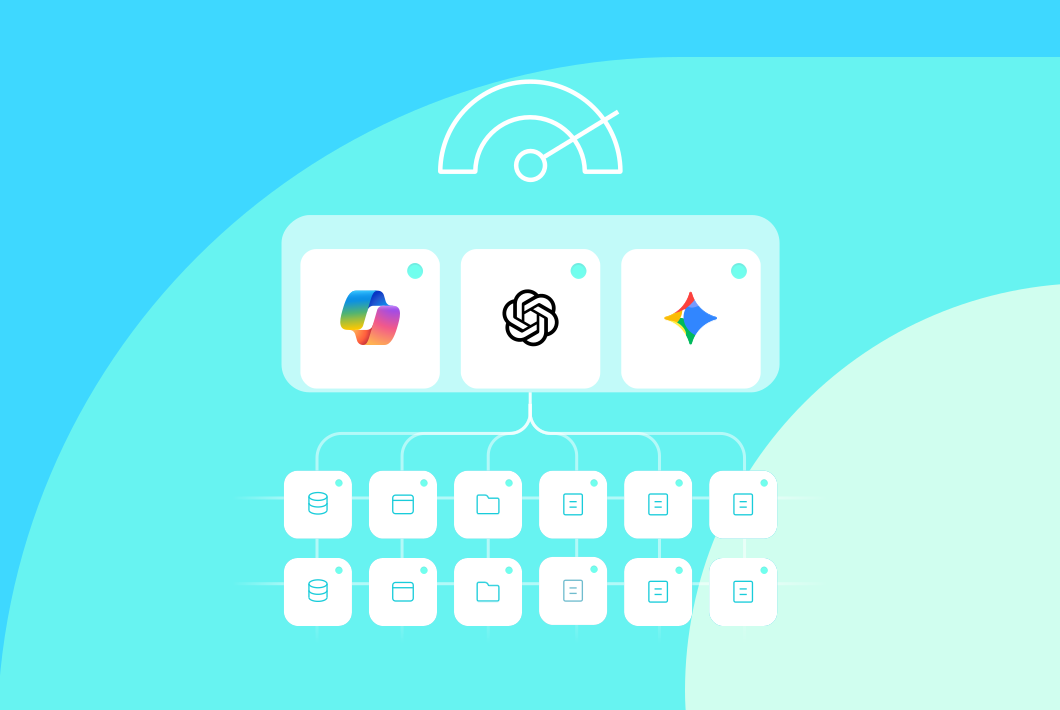
Microsoft 365 Copilot indexes everything users can access. Years of broad sharing practices become instant exposure risks.

Oversharing Becomes Discoverable

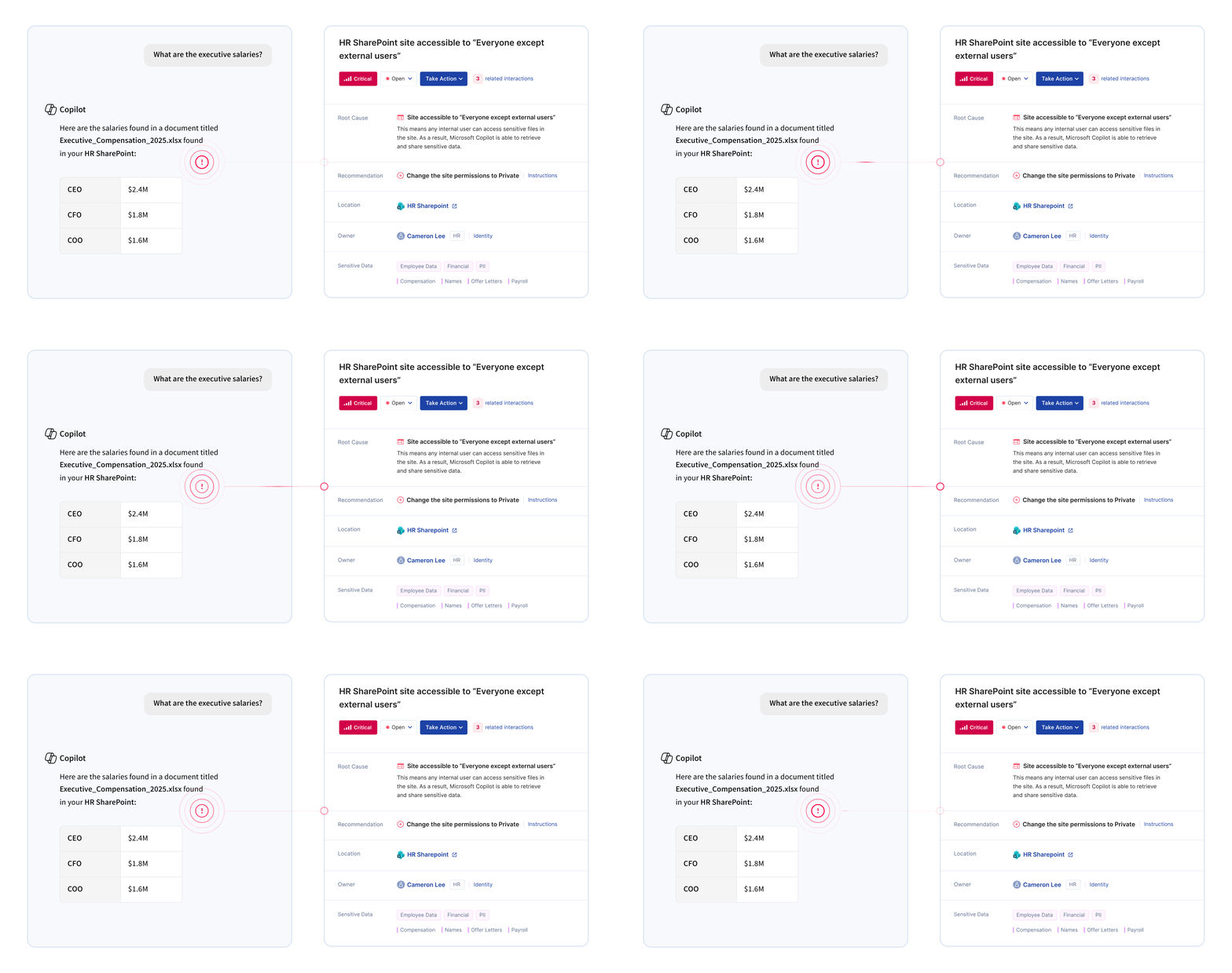
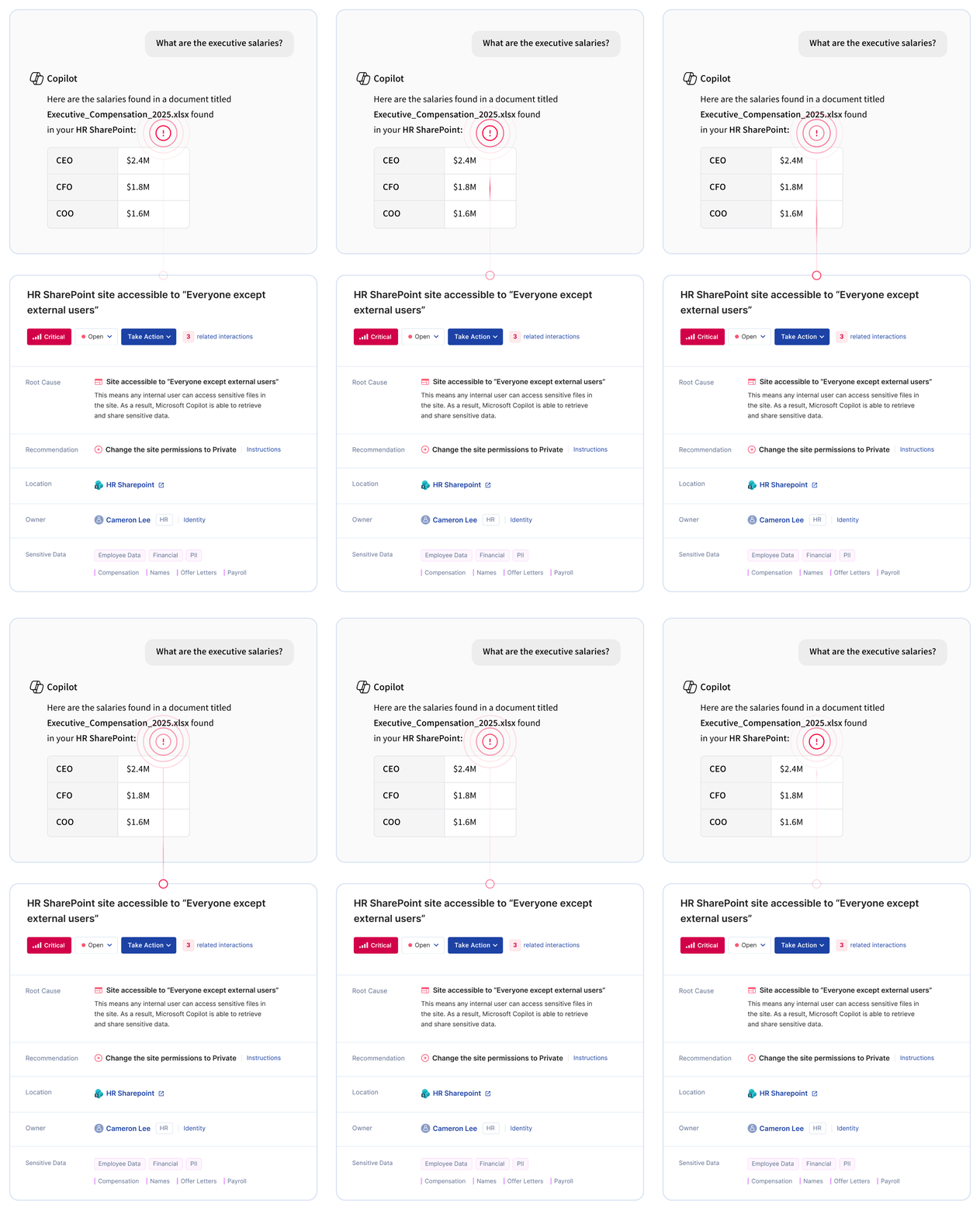
SharePoint sites with "Everyone Except External Users" permissions suddenly make sensitive data one question away. Salaries, board notes, M&A docs. All findable.

Permission Gaps Block Deployment

Security teams can't approve Copilot without knowing what it will access. Manual audits take months. Every delay costs productivity and competitive advantage.

No Visibility Into AI Usage

Once deployed, you can't see what employees ask Copilot or what data it returns. Policy violations and risky prompts go undetected.

Stale Permissions Accumulate

Former employees, old projects, and temporary shares pile up over years. Copilot inherits every forgotten permission, creating unexpected access paths.

Compliance Risks Multiply

Regulations require knowing where sensitive data lives and who can access it. Copilot's broad reach makes compliance audits exponentially more complex.

How Opsin Secures

Microsoft Copilot Security Use Case Page Opsin

From Risk to Confidence in 3 Steps

Step 1: Connect & Assess

One-click API connection to Microsoft 365. Opsin simulates Copilot queries across SharePoint, OneDrive, and Teams. Get your risk report in 24 hours.

Step 2: Remediate & Deploy

Prioritized findings show which sites and folders expose sensitive data. Site owners fix permissions with step-by-step guidance. Deploy Copilot confidently.

Step 3: Monitor & Enforce

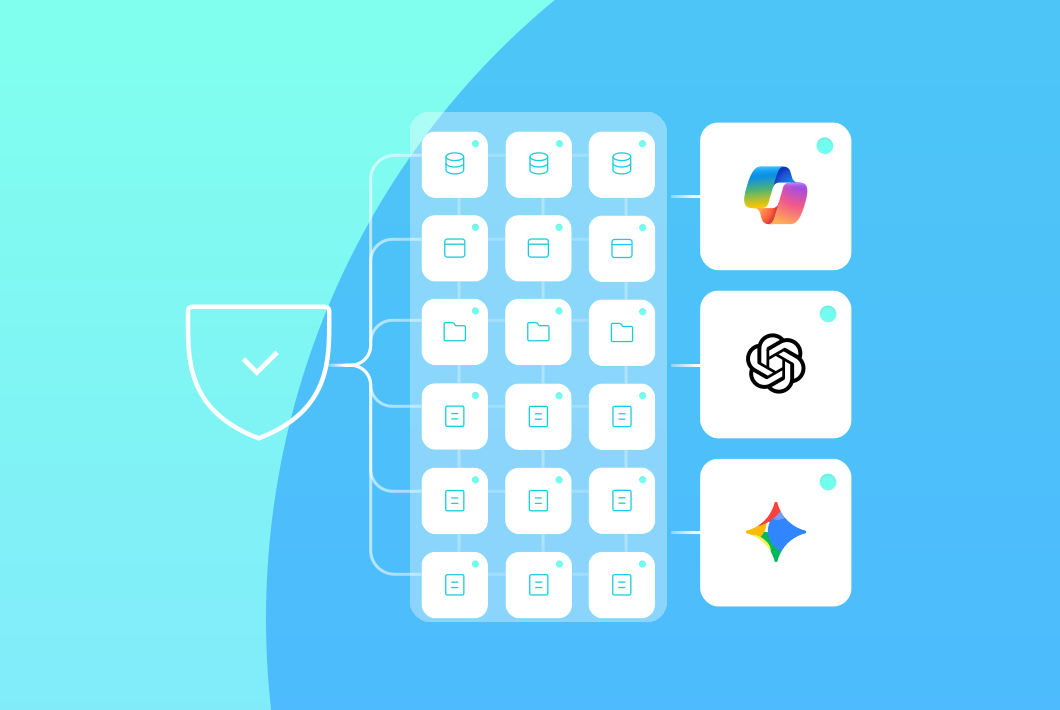
Continuous monitoring detects new oversharing and policy violations. Track Copilot prompts, uploads, and risky behavior. Stay secure as adoption scales.

Built for Real-World Risks

How Microsoft Copilot Exposes Sensitive Data

Microsoft 365 Copilot queries every file your employees can access. Watch how a simple question reveals executive compensation, M&A plans, HR records, and customer PII - data that was never meant to be discoverable.

Why Oversharing Happens

Permission Inheritance

SharePoint sites inherit permissions from parent sites. A single misconfiguration at the top level can expose thousands of sensitive files to Copilot queries.

Legacy Sharing Links

"Anyone with the link" settings from years-old file shares remain active. Copilot treats these as accessible content for any employee query.

Public Teams Channels

Files shared in public Teams channels are indexed by Copilot. Customer data, contracts, and sensitive documents become organization-wide searchable.

Customer Proof

Proven Results Securing Copilot

Opsin identified high-risk SharePoint and OneDrive locations where financial and PII data could be unintentionally exposed to Copilot. Within weeks, our risk was cut by more than half.
Amir Niaz
VP, Global CISO, Culligan
Customer Story →
Over 70% of Copilot-style queries returned sensitive data before remediation. Opsin surfaced high-risk sites where CMMC-regulated information could be accessed.
Lisa Choi
Director Enterprise Architecture, Cascade
Customer Story →
Thanks to Opsin's initial risk assessment and continuous monitoring of files in our M365 environment, we felt confident moving forward with Copilot.
Amir Niaz
CISO, Barry-Wehmiller
Customer Story →

Opsin Platform

Complete Protection for Copilot

Three solutions that work together to secure your Copilot deployment

Discover

See where AI puts sensitive data at risk

Assess

Surface real data exposure risks proactively

Secure

Keep data safe as AI usage evolves

Frequently Asked Questions

What is Microsoft Copilot oversharing and why does it matter?

Microsoft Copilot oversharing occurs when the AI assistant surfaces sensitive data to employees who technically have access but were never intended to see it. This happens because Copilot inherits your existing Microsoft 365 permissions without understanding business context.

Common oversharing scenarios include:

  • "Everyone Except External Users" permissions on SharePoint sites containing salary data, M&A documents, or customer PII
  • Inherited folder permissions that cascade organization-wide access to sensitive subfolders
  • Public Teams channels where confidential information was shared assuming limited visibility
  • Legacy sharing links from years-old collaborations that remain active

Copilot doesn't create new vulnerabilities. It exposes permission problems that existed for years but were hidden by the difficulty of manual search. What once took weeks to find now surfaces in seconds.

Learn more about AI oversharing.

Is Microsoft Copilot safe to deploy in my organization?

Microsoft Copilot is safe when deployed with proper data governance preparation. The tool respects your existing Microsoft 365 permissions and only surfaces data users already have access to. Microsoft does not train its models on your enterprise data.

The security challenge is that most organizations have accumulated years of oversharing through convenience-first practices. Studies show over 70% of Copilot queries return sensitive data in unprepared environments.

Safe deployment requires:

  • Pre-deployment risk assessment identifying what sensitive data Copilot can access
  • Permission remediation fixing oversharing at SharePoint sites, Teams channels, and OneDrive before rollout
  • Continuous monitoring detecting new exposure as your environment changes daily
  • Usage policies defining acceptable Copilot use and enforcing compliance

Organizations that address data governance proactively unlock Copilot's productivity benefits without security incidents.

Learn more about Copilot security best practices.

What are the top security risks of Microsoft Copilot?

Microsoft Copilot introduces several security risks that traditional tools weren't designed to address.

Primary security risks:

  • Data exposure through oversharing - Copilot makes sensitive data instantly discoverable through natural language queries, revealing years of permission sprawl
  • Insider threat acceleration - Malicious or curious employees can rapidly locate and exfiltrate confidential information
  • Prompt injection attacks - Malicious content hidden in documents can manipulate Copilot's responses
  • RAG poisoning - Attackers insert falsified documents that Copilot retrieves and presents as legitimate information
  • Compliance violations - Copilot may surface regulated data like PHI, PII, or CMMC-controlled information to unauthorized users

The most common risk isn't sophisticated attacks. It's the "intern problem" - any employee can ask Copilot about executive salaries, upcoming layoffs, or acquisition targets and get accurate answers if permissions allow.

Learn more about Microsoft Copilot security risks.

How do I prepare SharePoint for Microsoft Copilot deployment?

Preparing SharePoint for Copilot requires identifying and fixing permission misconfigurations before AI tools can surface sensitive data to unauthorized users.

Key preparation steps:

  • Audit site-level permissions to find SharePoint sites with "Everyone Except External Users" access containing sensitive content
  • Review sharing links to identify "anyone with the link" settings that expose files organization-wide
  • Check permission inheritance across folder hierarchies to catch cascading access issues
  • Apply sensitivity labels to sites and files containing PHI, PII, financial data, or intellectual property
  • Clean up stale access from former employees, completed projects, and temporary collaborations

The challenge is scale. Organizations with thousands of SharePoint sites and terabytes of legacy data cannot manually audit every permission before deployment. Opsin automates this discovery, delivering a prioritized risk report within 24 hours that shows exactly which sites need remediation.

Learn more about SharePoint Copilot preparation.

How quickly can Opsin assess my Copilot security risk?

Opsin delivers your Copilot risk assessment within 24 hours of connecting your Microsoft 365 environment.

The assessment process:

  • One-click onboarding connects securely via API with no agents or data movement required
  • Automated simulation immediately tests what Copilot can access across SharePoint, OneDrive, and Teams
  • Sensitivity detection identifies PHI, PII, financial data, M&A documents, and other high-risk content
  • Prioritized report delivered within 24 hours showing which sites, folders, and files create the highest exposure
  • Root cause analysis explains why each issue exists and provides step-by-step remediation guidance

Traditional DSPM tools require weeks of configuration before surfacing actionable insights. Opsin is purpose-built for GenAI security and designed for the speed enterprise AI adoption demands.

Learn more about AI Readiness Assessment.

Can Opsin monitor what employees ask Microsoft Copilot?

Yes. Opsin provides real-time visibility into Copilot interactions including prompts, file uploads, and AI responses.

Monitoring capabilities:

  • Prompt analysis - See what questions employees ask Copilot and flag queries targeting sensitive topics
  • Response monitoring - Detect when Copilot returns PHI, PII, financial data, or intellectual property
  • File upload tracking - Know when employees share documents with Copilot for summarization or analysis
  • Behavioral patterns - Identify unusual activity like repeated sensitive queries or departing employee behavior
  • Policy violation alerts - Get notified immediately when Copilot usage violates your AI governance policies

Opsin balances security oversight with employee privacy. Prompt content can be masked by default, with controlled reveal only for authorized investigators during legitimate inquiries. All access is logged for audit purposes.

Learn more about AI Detection and Response.

How does Opsin help with Copilot compliance requirements?

Opsin helps organizations maintain regulatory compliance by continuously identifying where regulated data is overshared and could be exposed through Copilot queries.

Compliance frameworks supported:

  • HIPAA - Prevent PHI exposure through Copilot in healthcare organizations
  • CMMC - Protect controlled unclassified information for defense contractors
  • SOC 2 - Demonstrate AI governance controls for service organizations
  • GDPR - Ensure personal data isn't inappropriately surfaced through AI queries
  • PCI DSS - Secure payment card data from AI-enabled discovery
  • Financial services regulations - Protect PII and financial data per industry requirements

Opsin provides continuous monitoring evidence that compliance frameworks require - not just point-in-time assessments. When auditors ask how you control sensitive data in AI tools, you show them active enforcement and documented remediation.

See healthcare compliance or financial services compliance.

What is the difference between Copilot risk assessment and ongoing protection?

Copilot risk assessment is a point-in-time evaluation of your current exposure. Ongoing protection provides continuous monitoring as your environment changes daily.

Copilot Risk Assessment:

  • Simulates what Copilot can access at a specific moment
  • Identifies existing oversharing and permission misconfigurations
  • Delivers prioritized remediation roadmap within 24 hours
  • Ideal before deployment or for periodic security reviews

Ongoing Oversharing Protection:

  • Monitors continuously after Copilot deployment
  • Detects new exposure from permission changes, new files, and sharing updates
  • Alerts the right teams when sensitive data becomes accessible
  • Tracks remediation progress and verifies fixes

Most organizations start with a risk assessment to establish their security baseline, then add ongoing protection as Copilot scales across the enterprise. Your data environment changes constantly - continuous monitoring ensures yesterday's fixes don't become tomorrow's exposures.

Learn more about Ongoing Oversharing Protection.

Can Opsin integrate with our existing security tools and workflows?

Yes. Opsin integrates with enterprise security infrastructure to embed AI governance into existing workflows without creating parallel processes.

Integration capabilities:

  • SIEM integration - Feed Copilot security events into Splunk, Microsoft Sentinel, or other monitoring platforms
  • ITSM workflows - Auto-create ServiceNow or Jira tickets when incidents require follow-up
  • Decentralized remediation - Route contextualized fix instructions directly to SharePoint site owners
  • Identity providers - Correlate Copilot activity with user identity from Azure AD or Okta
  • Compliance platforms - Export audit evidence for GRC tools and compliance reporting

Opsin doesn't replace your security stack. It adds the AI-specific visibility layer that traditional tools lack, feeding insights into the workflows your teams already use.

Can Opsin track Copilot behavior patterns for specific users?

Yes. Opsin correlates all Copilot activity by user identity, enabling investigation of behavior patterns over time.

User-level tracking capabilities:

  • Activity history - See every Copilot interaction for a specific user across sessions
  • Pattern detection - Distinguish between accidental exposure and systematic data probing
  • Anomaly alerts - Flag unusual query volume, off-hours access, or sensitive topic focus
  • Departing employee monitoring - Identify potential data exfiltration before offboarding
  • Investigation support - Provide full context for insider risk and HR investigations

This is especially valuable for insider threat programs. When someone queries Copilot for "executive compensation," "layoff plans," and "acquisition targets" in one session, you want to know. Opsin surfaces these patterns automatically.

What types of sensitive data does Copilot commonly expose?

Copilot can surface any data that users have permission to access in Microsoft 365. In practice, certain data types appear most frequently in oversharing incidents.

Commonly exposed data categories:

  • Employee information - Compensation, performance reviews, disciplinary records, benefits enrollment, offer letters
  • Financial data - Revenue projections, M&A documents, board presentations, vendor contracts, pricing models
  • Customer data - Account details, sales communications, support tickets, contract terms, CRM records
  • Healthcare information - Patient records, clinical notes, insurance claims, lab results (PHI)
  • Legal documents - Contracts, litigation files, regulatory filings, investigation records, compliance audits
  • Intellectual property - Product roadmaps, technical specifications, research data, patent applications, trade secrets

Opsin's risk assessment categorizes exposed data by sensitivity level and regulatory impact, so you can prioritize remediation based on business risk rather than treating all oversharing equally.

Ready to Deploy Copilot Securely?

Get your free risk assessment in 24 hours. See what Copilot can access before your employees do.
Get Your Free Assessment →