Opsin raises $21M to secure the agentic enterprise.
Hear from our founders →


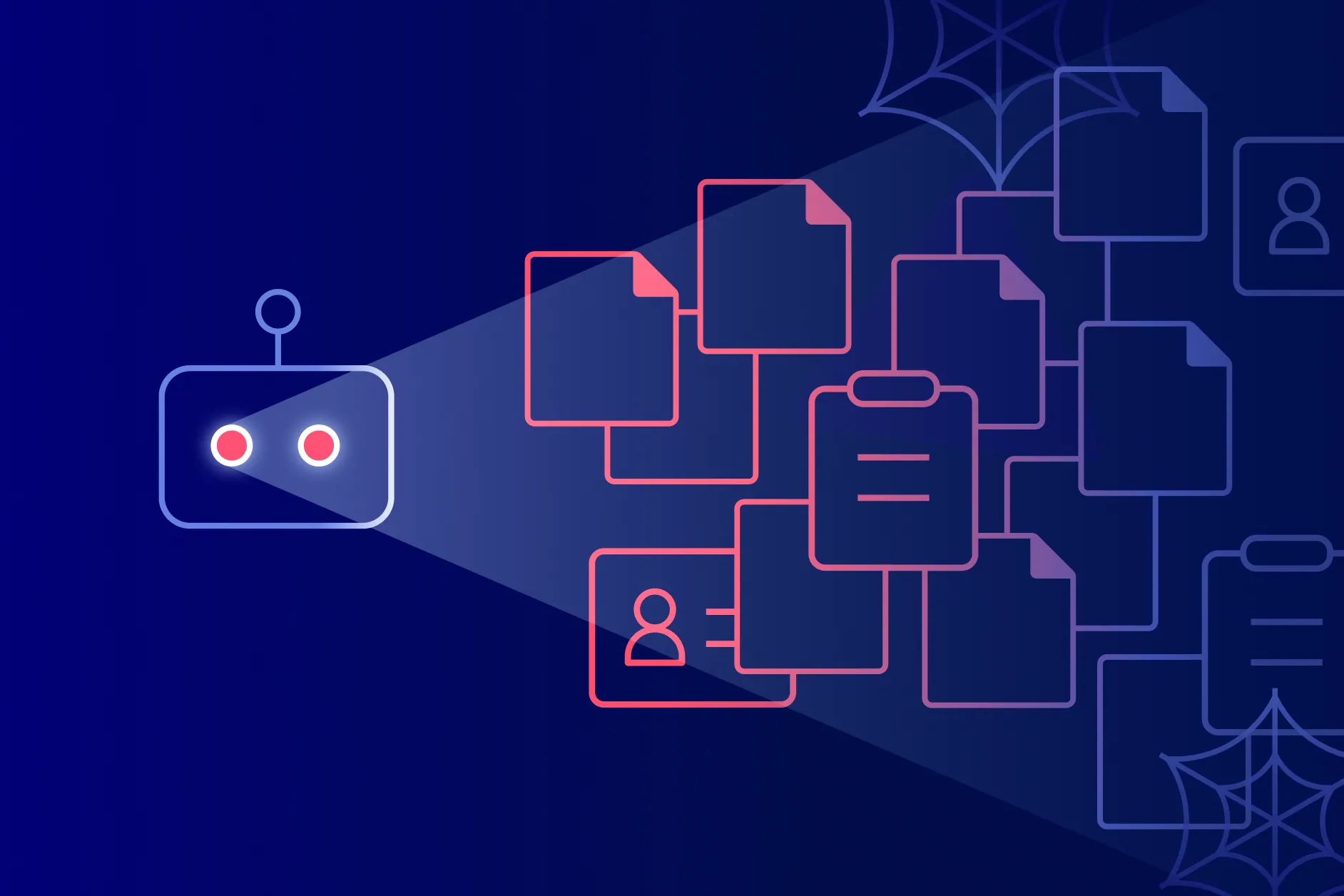
According to the research: “Gartner defines guardian agents as a blend of AI governance and AI runtime controls in the AI TRiSM framework that supports automated, trustworthy and secure AI agent activities and outcomes.” They are designed to supervise AI agents. That includes monitoring actions, enforcing policies, and intervening when behavior deviates from intended goals.
The timing is not accidental.
Enterprise adoption of AI agents is accelerating. Gartner states that: “17% of surveyed CIOs indicated their enterprise had already deployed AI agents, and another 42% planned to deploy them within one year, according to the 2026 Gartner CIO and Technology Executive Survey conducted in June 2025.”
AI agents are no longer confined to copilots generating text. They are executing tasks, interacting with APIs, accessing sensitive data, and operating across clouds. That changes the control model.
In our opinion, the most important signal in this report is that AI governance is shifting from policy design to runtime enforcement.
Gartner states that:
Unlike traditional applications, AI agents act autonomously. They retrieve data, reason over it, chain actions together, and trigger downstream effects.
That makes three things harder:
Static access controls are not enough. Governance must move into runtime.
Gartner highlights several structural shifts in the guardian agent market:
As a result, we believe there are three critical implications for CISOs.
The report predicts that “through 2028, at least 80% of unauthorized AI agent transactions will be caused by internal violations of enterprise policies concerning information oversharing, unacceptable use or misguided AI behavior rather than from malicious attacks.”
That includes:
This aligns with what many security leaders are already seeing. AI systems amplify existing governance weaknesses. Agents created internally under authorized applications can still share highly sensitive information externally without continuous, independent oversight.
Embedded controls inside hyperscalers and agent platforms are growing. But they are largely ecosystem-bound. Cross-cloud and cross-platform enforcement remains fragmented.
Gartner explicitly calls out the need for independent guardian agent layers to manage agents across clouds, identity systems, and data environments offering a single pane of glass for centralized oversight. That is an architectural shift.
Governance can no longer sit inside a single productivity suite or cloud provider. It must span the entire agent ecosystem.
One of the more important themes in the report is metagovernance. If guardian agents become part of the enforcement layer, they become part of the attack surface.
Gartner warns that: “as enterprises deploy guardian agents, it becomes essential to implement robust metagovernance controls to prevent misalignment, security breaches, and operational risks from the guardian agents themselves.” According to the research: “this layered approach, often called “defense-in-depth,” is gaining traction to counter overreliance on any single oversight mechanism and ensure guardians themselves remain bounded and auditable.”
This layered “defense-in-depth” approach reflects a reality many teams underestimate: Supervisory automation also requires oversight.
This report is a Market Guide, not a Magic Quadrant. It focuses on defining an emerging market, outlining required capabilities, and identifying representative vendors.
In our opinion, Gartner is less focused on product differentiation at this stage and more focused on architectural necessity. The report repeatedly emphasizes:
In our opinion, a consistent theme throughout the report is that ecosystem-bound controls will struggle to deliver full oversight in multiagent environments. We believe that architectural fit across clouds and systems matters more than incremental feature depth inside a single platform.
In our opinion, the report reflects a shift from extending legacy security controls toward designing a new control layer purpose-built for agentic AI.
Guardian agents sit at the intersection of identity and access management, information governance, runtime behavioral monitoring, and policy enforcement. Gartner also highlights the convergence of agent IAM and information governance which affords organizations “unified oversight of identity and data usage. This approach ensures that AI agents are not only authorized properly but also that their activities are auditable and compliant with regulatory requirements such as NIST standards and zero trust frameworks.”
Traditional separations between identity and data controls are narrowing. AI agents require continuous behavioral monitoring and dynamic, just-in-time access controls.
In practice, that means:
This is not theoretical governance. It is operational.
Opsin is included as a representative vendor in Gartner’s Market Guide for Guardian Agents in the risk and security specialist category (i.e. emerging companies specializing in dedicated AI/agent security, posture management, threat detection, and runtime defenses.)
Gartner defines that: “guardian agents supervise AI agents, helping ensure agent actions align with goals and boundaries. They monitor and block risky actions and are evolving from a collection of services to autonomous agents that enforce policies across platforms.” The Market Guide also emphasizes the need for metagovernance or independent governance of guardian agents themselves.
Opsin operates as a guardian agent with a metagovernance layer.
We continuously analyze AI agent behavior using full interaction context including prompts, responses, identity, data access, and downstream actions. This enables real-time detection of data exposure risk, policy violations, misalignment, and privilege misuse.
Opsin also monitors supervisory behavior to ensure guardian agents remain bounded, auditable, and aligned with enterprise intent. This reduces the risk of enforcement drift or unintended operational impact.
Opsin is also AI-agnostic and operates across enterprise AI environments, including Microsoft Copilot, Google Gemini, Enterprise GPT deployments, Claude-based systems, and custom agent frameworks.
We prioritize remediation based on:
Each issue is mapped to a clear owner with actionable remediation guidance. This enables decentralized remediation without slowing AI adoption.
For CISOs, the outcome is clear:
As the guardian agent market matures, layered governance and behavioral intelligence will become foundational to enterprise AI security.

In the context of agentic AI, Gartner makes clear that the immediate enterprise risk is policy violation and data misuse. The report predicts that “through 2028, at least 80% of unauthorized AI agent transactions will be caused by internal violations of enterprise policies concerning information oversharing, unacceptable use or misguided AI behavior rather than from malicious attacks.” (Page 2) That is a governance problem not a model quality problem.
As AI agents become autonomous actors, they:
Gartner states that: “in the absence of a global agent registry, organizations will prioritize advanced agent profiling and anomaly detection capabilities, and will rely on metadata for fingerprinting in the absence of declared agent identities, to counter escalating threats such as privilege escalation, authorization bypass, and unauthorized data access.” The defining issue is not whether an agent can access data. It is whether the agent should use that data in a given context — and whether anyone can see or constrain that decision in real time.
Guardian agents exist precisely for this reason. They provide:
Without a guardian layer, AI agents can combine information across domains, surface sensitive data unintentionally, or trigger downstream actions that exceed intended scope. And because agents operate autonomously, mistakes propagate quickly.
Once sensitive information is exposed, copied, transformed, or transmitted across systems, remediation becomes limited. The impact is regulatory, financial, and reputational.
This is why Gartner emphasizes runtime inspection, cross-platform governance, and the convergence of identity and information governance. In an agentic world, protecting data is no longer just about access control. It is about supervising how autonomous systems interpret, combine, and act on that data. Independent guardian agents are emerging as the enforcement layer that makes that supervision possible.
Opsin’s approach reflects several principles emphasized throughout the Market Guide for Guardian Agents.
Opsin enables organizations to scale agentic AI while maintaining control over how sensitive data is accessed, combined, and acted upon.
In our opinion, Gartner’s Market Guide for Guardian Agents signals that AI governance is entering a new phase.
AI agents cannot be governed with static controls alone. Runtime enforcement, independent oversight layers, and metagovernance are becoming essential components of enterprise AI architecture.
The question for CISOs is no longer whether AI agents will operate autonomously. It is whether governance will evolve fast enough to supervise them.
Gartner clients can access the full report here - Gartner’s Market Guide for Guardian Agents 2026
According to the research: “Gartner defines guardian agents as a blend of AI governance and AI runtime controls in the AI TRiSM framework that supports automated, trustworthy and secure AI agent activities and outcomes.” They are designed to supervise AI agents. That includes monitoring actions, enforcing policies, and intervening when behavior deviates from intended goals.
The timing is not accidental.
Enterprise adoption of AI agents is accelerating. Gartner states that: “17% of surveyed CIOs indicated their enterprise had already deployed AI agents, and another 42% planned to deploy them within one year, according to the 2026 Gartner CIO and Technology Executive Survey conducted in June 2025.”
AI agents are no longer confined to copilots generating text. They are executing tasks, interacting with APIs, accessing sensitive data, and operating across clouds. That changes the control model.
In our opinion, the most important signal in this report is that AI governance is shifting from policy design to runtime enforcement.
Gartner states that:
Unlike traditional applications, AI agents act autonomously. They retrieve data, reason over it, chain actions together, and trigger downstream effects.
That makes three things harder:
Static access controls are not enough. Governance must move into runtime.
Gartner highlights several structural shifts in the guardian agent market:
As a result, we believe there are three critical implications for CISOs.
The report predicts that “through 2028, at least 80% of unauthorized AI agent transactions will be caused by internal violations of enterprise policies concerning information oversharing, unacceptable use or misguided AI behavior rather than from malicious attacks.”
That includes:
This aligns with what many security leaders are already seeing. AI systems amplify existing governance weaknesses. Agents created internally under authorized applications can still share highly sensitive information externally without continuous, independent oversight.
Embedded controls inside hyperscalers and agent platforms are growing. But they are largely ecosystem-bound. Cross-cloud and cross-platform enforcement remains fragmented.
Gartner explicitly calls out the need for independent guardian agent layers to manage agents across clouds, identity systems, and data environments offering a single pane of glass for centralized oversight. That is an architectural shift.
Governance can no longer sit inside a single productivity suite or cloud provider. It must span the entire agent ecosystem.
One of the more important themes in the report is metagovernance. If guardian agents become part of the enforcement layer, they become part of the attack surface.
Gartner warns that: “as enterprises deploy guardian agents, it becomes essential to implement robust metagovernance controls to prevent misalignment, security breaches, and operational risks from the guardian agents themselves.” According to the research: “this layered approach, often called “defense-in-depth,” is gaining traction to counter overreliance on any single oversight mechanism and ensure guardians themselves remain bounded and auditable.”
This layered “defense-in-depth” approach reflects a reality many teams underestimate: Supervisory automation also requires oversight.
This report is a Market Guide, not a Magic Quadrant. It focuses on defining an emerging market, outlining required capabilities, and identifying representative vendors.
In our opinion, Gartner is less focused on product differentiation at this stage and more focused on architectural necessity. The report repeatedly emphasizes:
In our opinion, a consistent theme throughout the report is that ecosystem-bound controls will struggle to deliver full oversight in multiagent environments. We believe that architectural fit across clouds and systems matters more than incremental feature depth inside a single platform.
In our opinion, the report reflects a shift from extending legacy security controls toward designing a new control layer purpose-built for agentic AI.
Guardian agents sit at the intersection of identity and access management, information governance, runtime behavioral monitoring, and policy enforcement. Gartner also highlights the convergence of agent IAM and information governance which affords organizations “unified oversight of identity and data usage. This approach ensures that AI agents are not only authorized properly but also that their activities are auditable and compliant with regulatory requirements such as NIST standards and zero trust frameworks.”
Traditional separations between identity and data controls are narrowing. AI agents require continuous behavioral monitoring and dynamic, just-in-time access controls.
In practice, that means:
This is not theoretical governance. It is operational.
Opsin is included as a representative vendor in Gartner’s Market Guide for Guardian Agents in the risk and security specialist category (i.e. emerging companies specializing in dedicated AI/agent security, posture management, threat detection, and runtime defenses.)
Gartner defines that: “guardian agents supervise AI agents, helping ensure agent actions align with goals and boundaries. They monitor and block risky actions and are evolving from a collection of services to autonomous agents that enforce policies across platforms.” The Market Guide also emphasizes the need for metagovernance or independent governance of guardian agents themselves.
Opsin operates as a guardian agent with a metagovernance layer.
We continuously analyze AI agent behavior using full interaction context including prompts, responses, identity, data access, and downstream actions. This enables real-time detection of data exposure risk, policy violations, misalignment, and privilege misuse.
Opsin also monitors supervisory behavior to ensure guardian agents remain bounded, auditable, and aligned with enterprise intent. This reduces the risk of enforcement drift or unintended operational impact.
Opsin is also AI-agnostic and operates across enterprise AI environments, including Microsoft Copilot, Google Gemini, Enterprise GPT deployments, Claude-based systems, and custom agent frameworks.
We prioritize remediation based on:
Each issue is mapped to a clear owner with actionable remediation guidance. This enables decentralized remediation without slowing AI adoption.
For CISOs, the outcome is clear:
As the guardian agent market matures, layered governance and behavioral intelligence will become foundational to enterprise AI security.
In the context of agentic AI, Gartner makes clear that the immediate enterprise risk is policy violation and data misuse. The report predicts that “through 2028, at least 80% of unauthorized AI agent transactions will be caused by internal violations of enterprise policies concerning information oversharing, unacceptable use or misguided AI behavior rather than from malicious attacks.” (Page 2) That is a governance problem not a model quality problem.
As AI agents become autonomous actors, they:
Gartner states that: “in the absence of a global agent registry, organizations will prioritize advanced agent profiling and anomaly detection capabilities, and will rely on metadata for fingerprinting in the absence of declared agent identities, to counter escalating threats such as privilege escalation, authorization bypass, and unauthorized data access.” The defining issue is not whether an agent can access data. It is whether the agent should use that data in a given context — and whether anyone can see or constrain that decision in real time.
Guardian agents exist precisely for this reason. They provide:
Without a guardian layer, AI agents can combine information across domains, surface sensitive data unintentionally, or trigger downstream actions that exceed intended scope. And because agents operate autonomously, mistakes propagate quickly.
Once sensitive information is exposed, copied, transformed, or transmitted across systems, remediation becomes limited. The impact is regulatory, financial, and reputational.
This is why Gartner emphasizes runtime inspection, cross-platform governance, and the convergence of identity and information governance. In an agentic world, protecting data is no longer just about access control. It is about supervising how autonomous systems interpret, combine, and act on that data. Independent guardian agents are emerging as the enforcement layer that makes that supervision possible.
Opsin’s approach reflects several principles emphasized throughout the Market Guide for Guardian Agents.
Opsin enables organizations to scale agentic AI while maintaining control over how sensitive data is accessed, combined, and acted upon.
In our opinion, Gartner’s Market Guide for Guardian Agents signals that AI governance is entering a new phase.
AI agents cannot be governed with static controls alone. Runtime enforcement, independent oversight layers, and metagovernance are becoming essential components of enterprise AI architecture.
The question for CISOs is no longer whether AI agents will operate autonomously. It is whether governance will evolve fast enough to supervise them.
Gartner clients can access the full report here - Gartner’s Market Guide for Guardian Agents 2026